
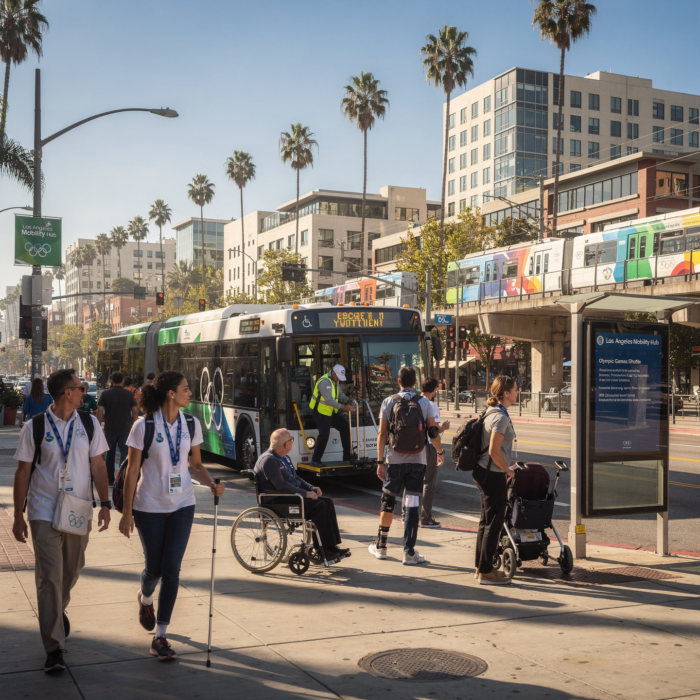
When people hear Los Angeles is hosting the 2028 Olympics, the first question usually comes quickly.
“How will anyone get around?”
It is a fair question. Los Angeles is known as a driving city. But something interesting has been happening behind the scenes for years. The Olympics didn’t start transportation improvements. They accelerated them.
By the time the Games arrive, the city will have a noticeably different transit network than the one people remember today.
A lot of the work is already underway.
The plan: a transit-first Olympics
City leaders have made it clear that the Games are being designed around public transportation. Many Olympic venues will not even have spectator parking available. The expectation is that most people will arrive by rail, bus, shuttle, bike, or rideshare.
To support that plan, transportation agencies across Southern California have been coordinating a long list of upgrades through programs like the regional Games Mobility Program, which focuses on transit, safety improvements, and better connections between venues and neighborhoods.
The goal is simple. Move millions of people efficiently while keeping the city running for residents and businesses.
Here are some of the improvements people can expect.
A bigger rail network across Los Angeles
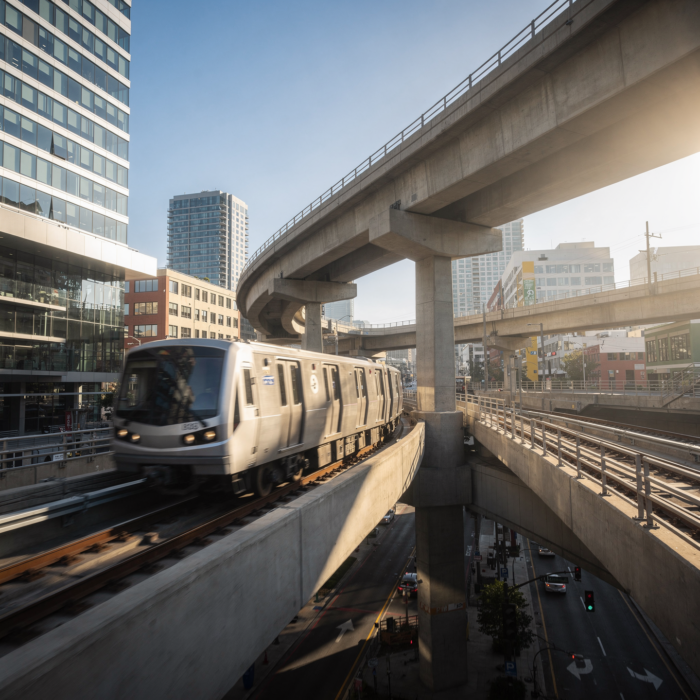
One of the biggest changes will be the expansion of the Metro rail system.
Several major rail projects are being completed before the Games as part of Metro’s “Twenty-Eight by ’28” initiative, a long-term plan to improve regional transit ahead of the Olympics.
For example:
- The D Line subway extension will connect Downtown Los Angeles to the Westside, reaching areas like Beverly Hills, Century City, and Westwood.
- The A Line extension continues expanding east toward the San Gabriel Valley.
- New connections are linking rail lines together so riders can travel across the region more easily.
For visitors, this means fewer transfers and more direct routes between Olympic venues.
For residents, it means a rail system that finally reaches more parts of the city.
A direct connection to the airport
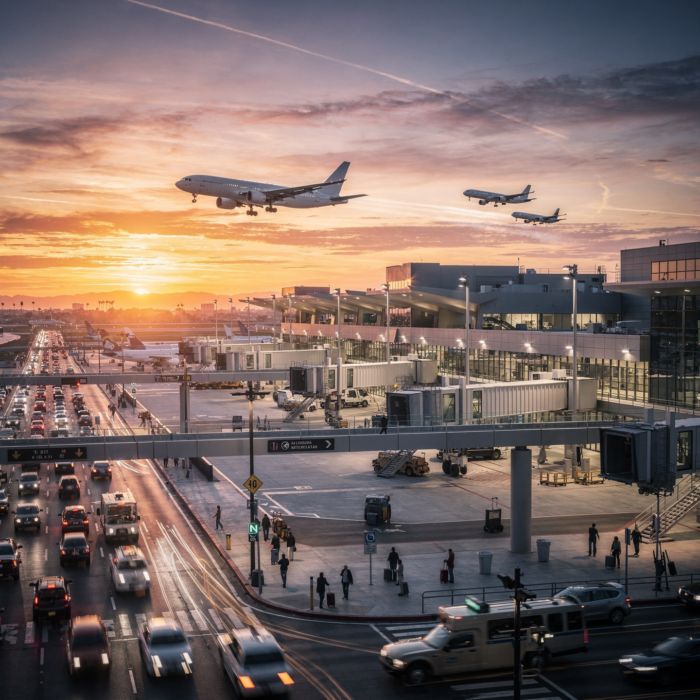
Another major improvement is the new LAX/Metro Transit Center, which connects the Metro rail system with airport shuttles and buses.
For decades, travelers landing at Los Angeles International Airport had to rely heavily on cars or taxis. This hub will allow passengers to move directly between the airport and the Metro system.
During the Olympics, that connection will be critical. Millions of visitors will arrive through the airport, and many of them will head straight to transit.
Better access to Olympic venues
In several areas, new transit links are being designed specifically to improve access to venues.
One example is the Inglewood Transit Connector, a project that will link the Metro K Line station to major sports venues including SoFi Stadium and the nearby arena district.
Instead of thousands of cars circling stadium parking lots, spectators will arrive by train and transfer directly to local transit connections.
It is a model used successfully in many Olympic host cities.
Olympic shuttle networks
Transit improvements will not rely on rail alone.
During the Games, a temporary Games Enhanced Transit System will operate across the region. This includes shuttle buses, park-and-ride hubs, and special routes designed specifically for Olympic travel patterns.
These shuttles will link transit stations with venues, helping move large crowds quickly.
Organizers are even planning fleets of zero-emission buses to support Olympic transportation operations.
What this means for visitors and businesses
For companies setting up temporary operations in Los Angeles during the Olympics, transportation planning will matter.
Where employees stay.
Where offices are located.
How staff move between venues.
The good news is that Los Angeles is preparing years in advance.
By 2028, the city will have:
- A larger Metro rail network
- Stronger airport transit connections
- Dedicated Olympic shuttles
- New mobility hubs near venues
It will not look exactly like cities with centuries-old subway systems. But it will be far easier to move around Los Angeles than many people expect.
The bigger picture
What makes the 2028 Olympics different is that most of these transportation improvements are not temporary.
They are investments meant to benefit the region long after the closing ceremony.
So while the Games may last only a few weeks, the transit upgrades are designed to serve Southern California for decades.
And for visitors arriving in 2028, getting around Los Angeles may feel surprisingly smooth.
Call/Text 310.487.2982

I’ve always been someone who reads the room.
It started in live television, where timing was everything and silence usually meant something was on fire. With years of experience behind the scenes in TV production, I learned how to stay calm, think creatively, and resolve issues before they become problems.
Now, 𝗮𝘀 𝗮 𝘁𝗲𝗻𝗮𝗻𝘁 𝗿𝗲𝗽 𝗯𝗿𝗼𝗸𝗲𝗿 𝗮𝘁 𝗦𝗮𝘅𝘂𝗺 𝗪𝗲𝘀𝘁, I bring that same mindset to commercial real estate.
It’s not about pushing space, it’s about understanding people. When someone tells me they need an office, what they mean is:
“𝙒𝙚 𝙣𝙚𝙚𝙙 𝙖 𝙝𝙤𝙢𝙚 𝙗𝙖𝙨𝙚 𝙛𝙤𝙧 𝙞𝙙𝙚𝙖𝙨, 𝙙𝙚𝙖𝙙𝙡𝙞𝙣𝙚𝙨, 𝙘𝙡𝙞𝙚𝙣𝙩𝙨, 𝙖𝙣𝙙 𝙘𝙤𝙛𝙛𝙚𝙚 𝙗𝙧𝙚𝙖𝙠𝙨. 𝘼𝙣𝙙 𝙬𝙚 𝙣𝙚𝙚𝙙 𝙞𝙩 𝙨𝙤𝙤𝙣.”
𝗧𝗵𝗮𝘁’𝘀 𝘄𝗵𝗲𝗿𝗲 𝗜 𝗰𝗼𝗺𝗲 𝗶𝗻.
I don’t just lease office space. I help you get the right space at the right price!
Nina Steiner – TenantRepLA
Text: 310-487-2982
Email: nsteiner@saxumwest.com
Website: TenantRepLA.com
 Nina Steiner -TenantRepLA